
Intentional Entryway Design for Daily Rituals
Set the tone for your home with a purposeful entry. Learn how minimalist design principles create a welcoming transition space that supports mindful daily routines.
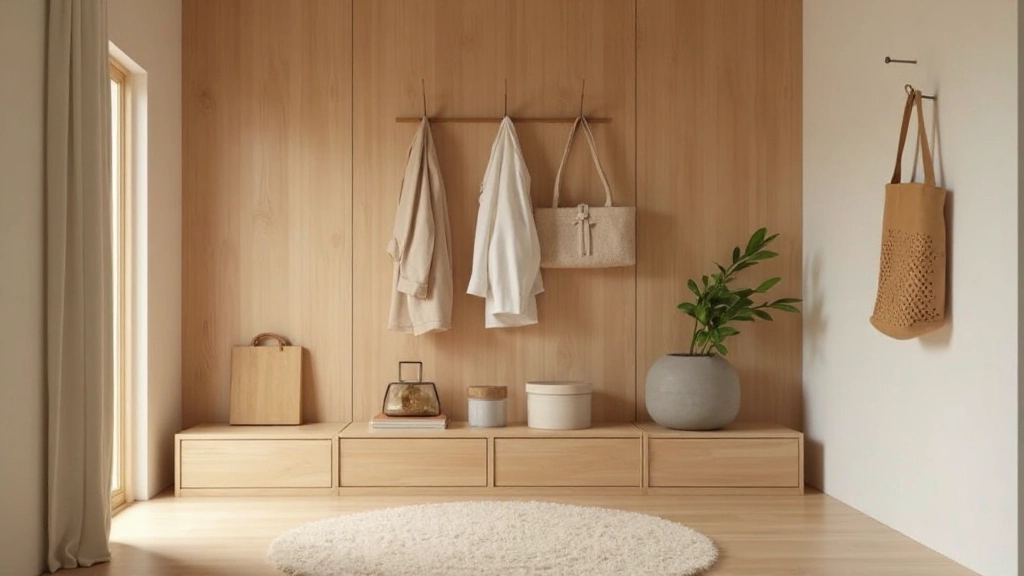
Your Entry Sets Everything in Motion
The entryway is far more than a threshold. It's a ritual space—the moment between your external world and your sanctuary. In Japanese design philosophy, this transition deserves intention. An intentionally designed entryway grounds you as you arrive home and prepares you as you leave. It absorbs the day's energy before it reaches your living space.
By applying minimalist principles to your entry, you create a functional zone that supports your daily rhythms. Every item serves a purpose. Every surface breathes. The result: a space that feels peaceful, organized, and deeply personal.
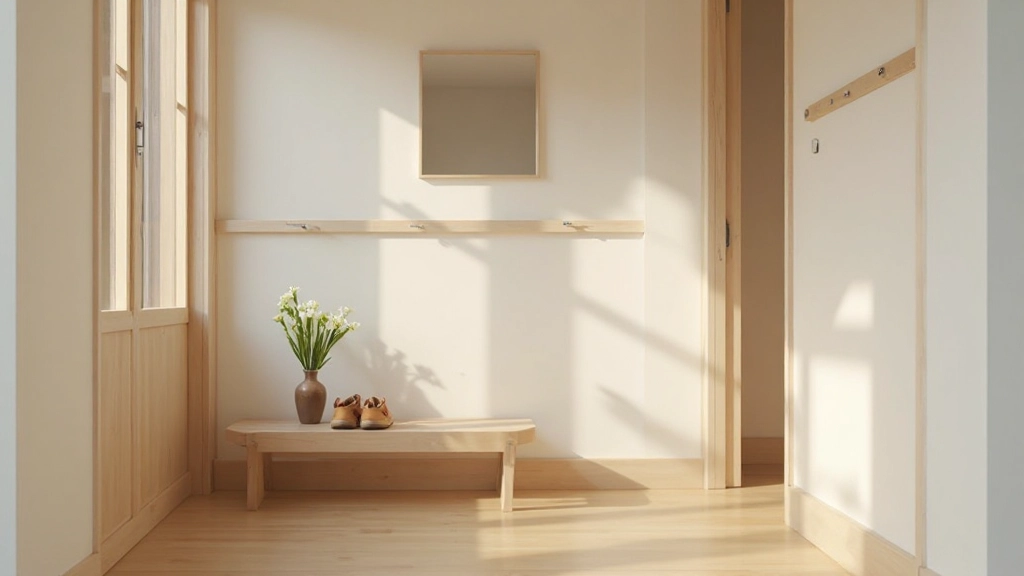
Three Core Principles of Intentional Entry
These foundational concepts guide every design decision for your entryway space
Purpose Before Possession
Every item in your entryway should answer a clear question: What need does this serve? A shoe rack organizes footwear. Hooks hold coats. A mirror checks appearance. Remove anything that doesn't actively support your daily ritual. This creates clarity and prevents clutter from accumulating.
Breathing Space (Ma)
Japanese design honors emptiness as much as fullness. The concept of "ma"—strategic empty space—makes your entryway feel expansive even in a small area. Leave walls partially bare. Keep the floor clear. This emptiness is not absence; it's presence. It invites calm and prevents visual overwhelm.
Material Honesty
Choose natural, honest materials that age gracefully. Wood, stone, ceramic, and metal tell the story of use and time. Avoid plastic or overly shiny finishes that create visual noise. Quality materials, used sparingly, create sophistication and warmth that endures beyond trends.
Essential Design Elements for Function
A minimalist entryway includes seven key elements. Each serves a specific function in supporting your daily rituals. Rather than accumulating items, these seven create a complete, functional entry space.
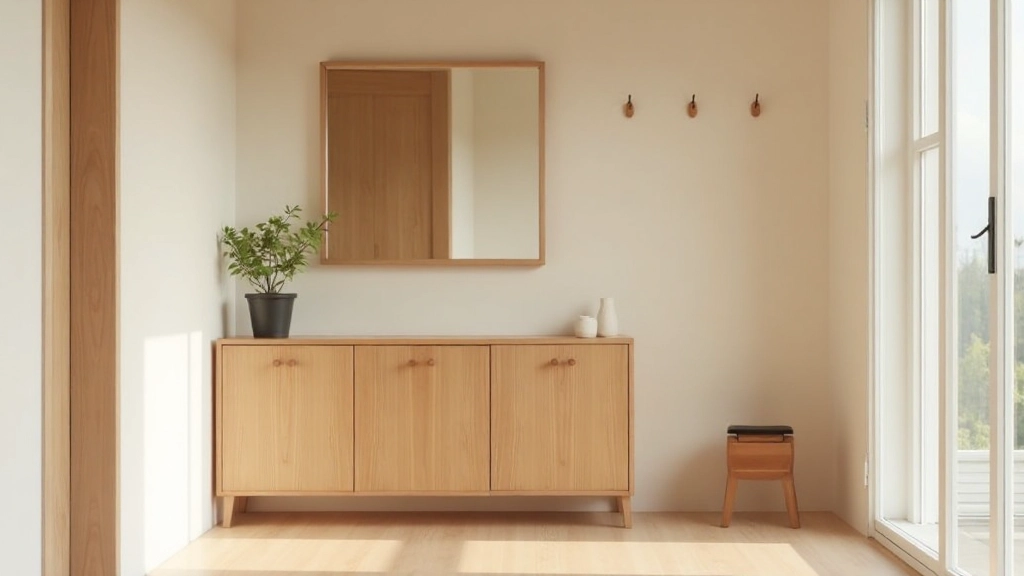
- Shoe Storage: A low wooden rack or simple shelf keeps footwear organized and off the floor
- Wall Hooks: 2-3 sturdy hooks hold coats, bags, and keys without visual clutter
- Small Mirror: A simple frame helps with final checks and reflects light
- Flooring Transition: A low-profile mat defines the entry zone
- Lighting: Warm, soft light creates welcoming ambiance
- Bench or Seating: Optional: a simple seat for putting on shoes
- Natural Elements: A single plant or natural material adds life
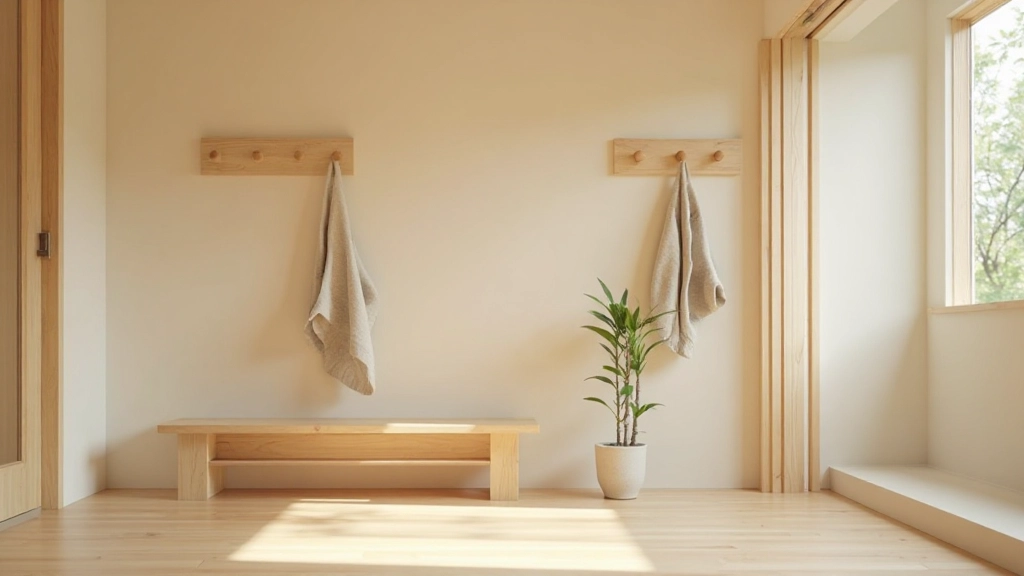
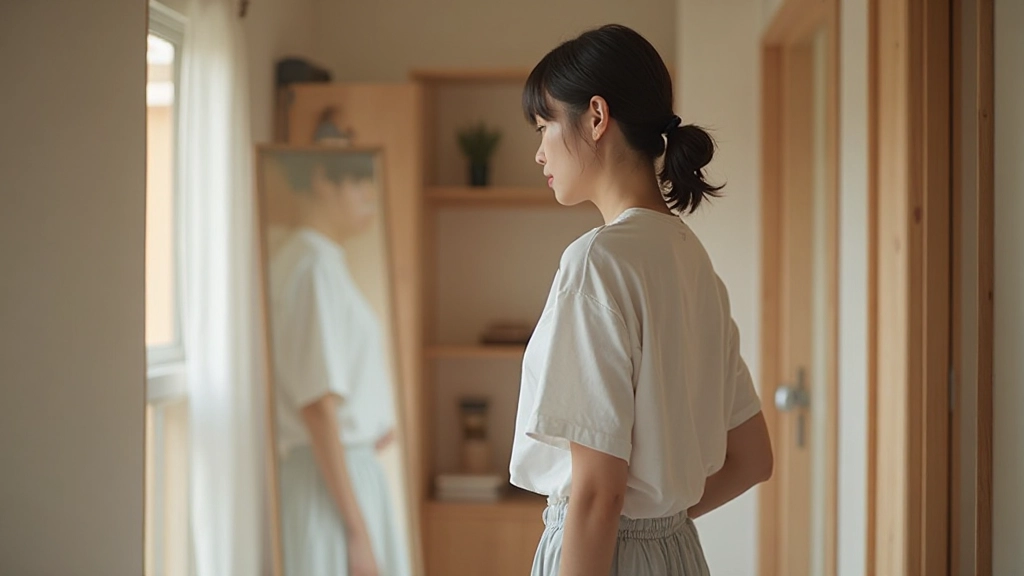
Designing for Daily Transitions
Your entryway supports two critical rituals: arrival and departure. When you arrive home, the space should help you release the day. When you leave, it should prepare you for what's ahead. A minimalist design supports both through intentional organization.
The entryway becomes a ritual space when every element supports a specific action. You don't think about where your shoes go—they have a home. You don't search for your keys—they hang in one place. This removes friction from daily life and creates a sense of calm control.
Consider how you actually use your entryway. Do you put on shoes while standing or sitting? Do you check yourself in a mirror? Do you need a place to set bags temporarily? Let your rituals guide your design. A minimalist entryway isn't about having the fewest items; it's about having exactly the right items arranged in exactly the right way.
Transforming Your Entry Step by Step
A practical approach to redesigning your entryway for minimalism and function
Start with Clarity
Before buying anything new, remove everything from your entryway. Sweep it clean. Notice how it feels empty. This becomes your baseline. Now, bring back only what you use regularly. Ask hard questions: Does this item serve my daily rituals? Does it bring me satisfaction? Can it be replaced with something simpler?
Choose Your Anchor Piece
Select one high-quality piece that will anchor your design—typically shoe storage or a coat rack. Choose natural materials and a simple, timeless design. This piece sets the aesthetic for everything else. Keep it visible and let it be beautiful in its simplicity. Everything else should complement, not compete.
Build Around Function
Add items based on what your rituals require. Wall hooks for coats. A small mirror. Lighting that's warm and welcoming. Each addition should feel necessary, not decorative. The result won't feel sparse—it will feel complete, with every element earning its place.
Your Entry, Your Ritual
"The details of your home are not decoration. They are the choreography of your daily life."
— Minimalist Design Philosophy
An intentionally designed entryway is one of the most powerful changes you can make in your home. It costs nothing to remove clutter. It requires no renovation to add meaning. What it does require is thoughtfulness about how you actually live, paired with commitment to keeping only what serves that life.
Your entry is a threshold. It marks the transition between your public self and your private sanctuary. When you design it with intention, it becomes a small ritual that grounds you every single day. It whispers, "You're home now. Everything you need is here." That's the power of a minimalist entryway designed for your daily rituals.
About This Article
This article provides educational information about minimalist design principles and entryway organization. It is intended to offer guidance and inspiration for personal home design projects. Results and preferences vary based on individual circumstances, space constraints, lifestyle, and aesthetic preferences. This information is not a substitute for professional interior design consultation. Always consider your specific needs, budget, and living situation when making design changes. The design principles discussed reflect established minimalist and Japanese design philosophies but may be adapted to suit your unique home and rituals.